
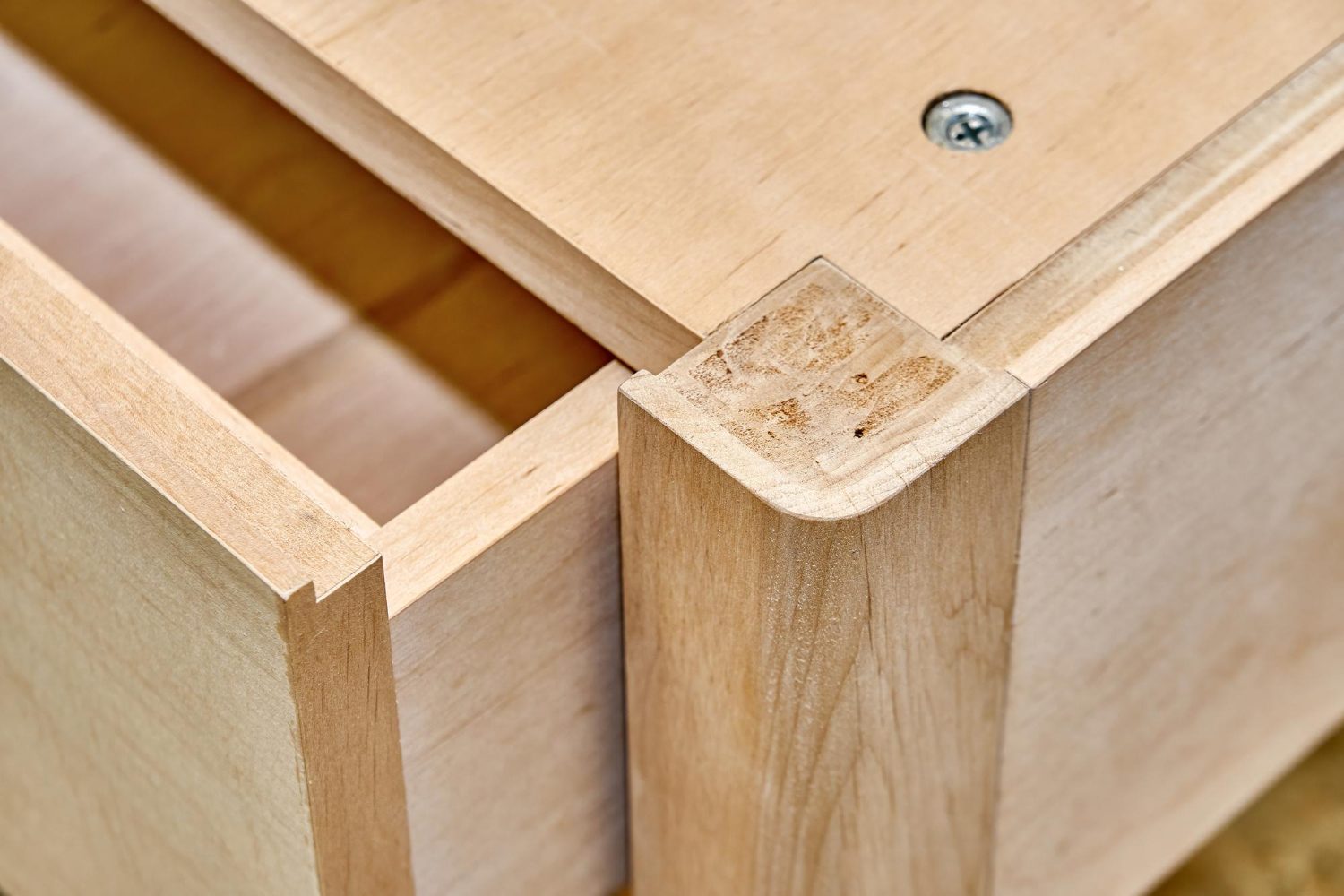
Choosing between plywood and solid wood cabinets impacts your kitchen’s durability, aesthetics, and budget significantly.
Both materials offer unique advantages that will affect your final result – but which deserves your investment?
In this comprehensive comparison, you’ll discover key differences in durability, production costs, and environmental impact.
Learn why certain choices better suit your budget while others offer superior longevity.
Let’s explore everything you need to make an informed decision tailored to your specific needs!
Plywood vs Solid Wood Cabinets: Key Differences
When comparing plywood and solid wood cabinets, the main differences involve durability, cost, aesthetics, and environmental impact.
Durability
Solid wood cabinets are renowned for their longevity and damage resistance. They can last decades with proper care, though they require regular maintenance and sealing. Our custom kitchen cabinets in New Jersey showcase how quality wood construction ensures lasting beauty.
Plywood, while more affordable, offers different durability benefits – particularly its resistance to moisture and warping that makes it practical for certain applications.
Cost
Solid wood cabinets typically cost $300-400 per linear foot, while plywood cabinets average around $300 per linear foot for quality construction, making them a more economical option for many homeowners.
Aesthetics
Solid wood provides natural grain patterns and unique character that attracts clients seeking elegant appearances. While plywood can mimic wood’s look, it often lacks the depth and refinement of genuine material.
Environmental Impact
Plywood, constructed from multiple thin wood layers, can be more sustainable as it utilizes less natural wood. Solid wood often comes from forests where overexploitation may lead to resource depletion.
| Criteria | Plywood | Solid Wood |
| Durability | Less durable | Very durable |
| Cost | Often cheaper | More expensive |
| Aesthetics | Wood imitation | Natural appearance |
| Sustainability | Sustainable sources | Harvesting concerns |
Durability of Plywood vs Solid Wood Cabinets
Cabinet durability is crucial when selecting materials for kitchens and bathrooms.
Solid wood cabinets are valued for natural durability, lasting decades with proper care including regular maintenance and sealing. However, their susceptibility to humidity changes makes them vulnerable to warping. Moisture can cause cracking and distortion, negatively affecting both aesthetics and functionality.
Plywood demonstrates greater resistance to humidity changes and atmospheric conditions. Composed of multiple wood layers, it doesn’t deform as easily as solid wood, making it practical for humid spaces like kitchens and bathrooms where our cabinet maker in New Jersey often recommends it for specific applications.
Here’s a durability comparison:
| Material | Durability | Moisture Impact | Maintenance |
| Solid Wood | High with proper care; lasts decades | Sensitive to moisture; warping and cracking | Requires regular sealing |
| Plywood | High; more stable in various conditions | Moisture-resistant; rarely warps | Requires less maintenance than solid wood |
Aesthetic Value: Plywood vs Solid Wood Cabinets
Solid wood cabinets offer significantly richer design possibilities, making them exceptionally attractive for classic and elegant interiors.
Natural wood grain, specific colors, and customization possibilities attract attention and add character to spaces. They’re easily painted, stained, or varnished, providing extensive aesthetic options for kitchen furniture. When you visit our carpenter workshop in Saddle Brook, you can see firsthand how solid wood transforms into stunning custom pieces.
Plywood, though capable of imitating wood aesthetics, lacks the same depth and expression as solid wood. Its patterns are less varied, potentially making kitchens appear more uniform.
In terms of aesthetics and expressiveness, solid wood remains the clear leader, attracting attention and adding elegance to any kitchen space.
Cost Considerations: Plywood vs Solid Wood Cabinets
Solid wood cabinet costs range from $300-400 per linear foot, making them a premium market option. Investment in solid wood furniture often correlates with higher quality and aesthetics, though it may discourage those with limited budgets.
Plywood cabinets are significantly more affordable, making them popular for budget-conscious projects. For example, quality plywood cabinets may cost $100-200 per linear foot, allowing substantial savings on initial expenses.
While solid wood cabinets offer long-term value, they require greater maintenance attention, potentially involving additional costs. Our custom closets throughout New Jersey demonstrate how both materials can be optimized for different budget requirements.
| Cabinet Type | Initial Cost (per linear foot) | Maintenance Costs |
| Solid Wood | $300-400 | High (requires sealing) |
| Plywood | $100-200 | Low (minimal maintenance) |
Maintenance and Care for Plywood vs Solid Wood Cabinets
Plywood is known for easy maintenance, making it practical for busy households. Unlike solid wood, it doesn’t require frequent sealing or special attention.
Plywood Care:
- Use soft cloths for cleaning
- Apply gentle detergents
- Avoid prolonged water contact
Solid Wood Care:
- Seal annually to maintain appearance
- Use natural cleaning products
- Regularly wipe water spills to prevent stains
With proper maintenance, both materials can look excellent for years. For solid wood, appropriate care ensures cabinets remain beautiful for decades. Our furniture restoration services in New Jersey can help revive older cabinets regardless of material.
Environmental Impact: Plywood vs Solid Wood
Material choice for cabinet production significantly impacts the environment.
Solid wood, though natural, may be less ecological when resource shortages occur. Common solid wood harvesting can lead to deforestation, affecting biodiversity and ecosystems.
Plywood utilizes smaller wood pieces more efficiently, managing resources better. Additionally, plywood production generates less waste, supporting raw material renewability.
Plywood is often produced from sustainably managed forests. With appropriate standards, plywood can be more environmentally friendly than solid wood, especially considering intensive wood resource exploitation.
FAQ
Q: What are the main differences between solid wood and plywood cabinets?
A: Solid wood cabinets offer natural patterns and durability but are more expensive and moisture-sensitive. Plywood is cheaper, more stable, and better resists temperature changes.
Q: Why might plywood be a better cabinet choice than solid wood?
A: Plywood resists warping better and is easier to install. Additionally, it better tolerates humidity and temperature changes, ensuring long-term stability.
Q: What are the costs for solid wood versus plywood cabinets?
A: Solid wood cabinets cost $300-500 per linear foot, while plywood cabinets start around $300 for quality construction, making them more accessible.
Q: How long do solid wood cabinets last compared to plywood?
A: Solid wood cabinets can last decades with proper care, while quality plywood is also durable but may not withstand intensive use as long.
Q: Which brands offer good solid wood and plywood cabinets?
A: Popular solid wood brands include Decorá Cabinets, Diamond Cabinets, and Fabuwood. Leading plywood brands include Milino Cabinets, UltraCraft Cabinets, and WOLF Cabinets.
Q: Why shouldn’t particle board be used for cabinets?
A: Particle board is less durable, easily damaged by water contact, and doesn’t maintain stability like solid wood or plywood, making it an inferior choice.